
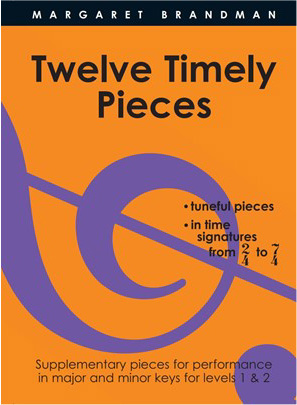
Margaret Brandman has composed twelve imaginative and tuneful pieces in time signatures from 2/4 to 7/4 in major and minor keys up to two sharps and two flats. Grades 1 – 4.
This set of pieces was written in response to many requests received over the past few years for interesting and original music for performance at concerts, eisteddfods, examinations and school musicals.
"I've endeavoured to compose catchy tunes, using such devices as the fun sound of parallel fifths, the unusual qualities of modes and modal harmonies and some intriguing rhythmic twists. Some pieces are vigorously rhythmic while others are quite ambient in nature, incorporating modern jazz oriented chord sounds such as major sevenths or chords which incorporate the extension degrees of 9th, 11th or 13th."
"The tunes lie well in hand position and area changes are indicated by 'key fingering', making them not only easy to read, but also facilitating the technical aspects required to play them. The pieces provide supplementary material and consolidation of the areas covered in Books 1A, 1B, 2A and 2B of my Contemporary Piano Method."— Margaret Brandman
About the Collection
This set of short character pieces were written for pianists looking for fresh ideas to study and perform for concerts, eisteddfods or examinations. Based on engaging melodies with intriguing rhythmic twists they explore major and minor keys of up to two sharps and two flats and a variety of time signatures from 2/4 to 7/4. The styles range from simple two part settings to meditative pieces with chromatic harmonies.
Pieces in Detail
Happy Happy Joy Joy
This piece uses an ostinato style figure based on harmonic 4ths and 5ths. The piece is unified by the introductory theme, to which the words of the title can be sung, which appears again in the middle of the song and also at the end.
Mongolian Knights
This contrasting piece uses similar harmonic devices to the first tune, but in different context. The harmonic fifths create an eastern sound evoking the Knights in the title.
Charlies Cheerful Chune
The bright rising theme of this piece covers the range of a sixth. The dotted quarter note figure is featured. There is use of imitation and also of descending left hand lines which create interesting harmonies.
Sammy's Sad Soul
As a counterpart to the previous piece, this tune uses a falling theme over the range of a sixth in the minor key. There is much use of phrasing and slurs to create an interesting texture and bring out various melodic ideas.
Celtic Country Dance
This piece uses the appealing sound of harmonic fifths in a left rhythmic accompaniment pattern which suggests a country dance. The harmonies in the first section introduce some chromatic movements, while at the end the use of modern harmonies add a cheerful brightness to the sound.
The Lonesome Bat
This two part work allows the hands to have a conversation with each other. It is a good study in mixed eighth and quarter note rhythmic patterns.
No.5 is Alive
This piece uses a Jazz treatment of the 5/4 rhythm underpinning a gently flowing melody.
Spider on the Mirror
The theme explores the curious keyboard phenomenon of the exact mirror of black and white notes, moving outwards chromatically from D. The piece is in ternary form with a coda section. The left hand in the middle section creates a jazzy rhythm, punctuated by chord clusters in the right hand. The coda uses intriguing chordal figures based on the mirror movement of the notes, with final octave leaps suggesting the movement of a spider covering a large area.
Minnamurra Rainforest Dreaming
This ambient work features left hand broken chord figures floating through 6th, 7th, and 9th chords. Played in rubato tempo so that the right hand dreamy melody can be gently expressed. The 6/4 time signature is split in groups of two — performers may count in 3/2 if they wish.
Sleepy Creepy Ghost Story
Harmonic fourths achieve a spooky effect. The creepy quality is created by the alternating stepwise movement of the accompanying chords and the open sound of the final chord, which does not contain a third — a ghostly chord with no 'body'!
Morse Code (Code B)
The opening percussive figure reminds the listener of Morse code. The treatment of 7/4 is highly rhythmic, somewhat like a Toccata. To achieve full effect the piece should be played quite fast.
Snow Gums in the Moonlight
Beginning with a one-bar introduction using jazzy chords, this ambient work features rising arpeggiated figures in the left hand accompanying a flowing right hand melody. The second section presents the theme in a higher register, with the richer sound of harmonic 6ths complementing the melody. The piece concludes on a Minor 9th chord.
Reviews
There are no reviews yet.